
There are moments in life when you pause—not because the world has stopped, but because something inside you has come quietly to rest. In that pause, you do not measure your success. You trace your survival. You do not look at milestones—you search for moments that held you, even when you didn’t realise it then.
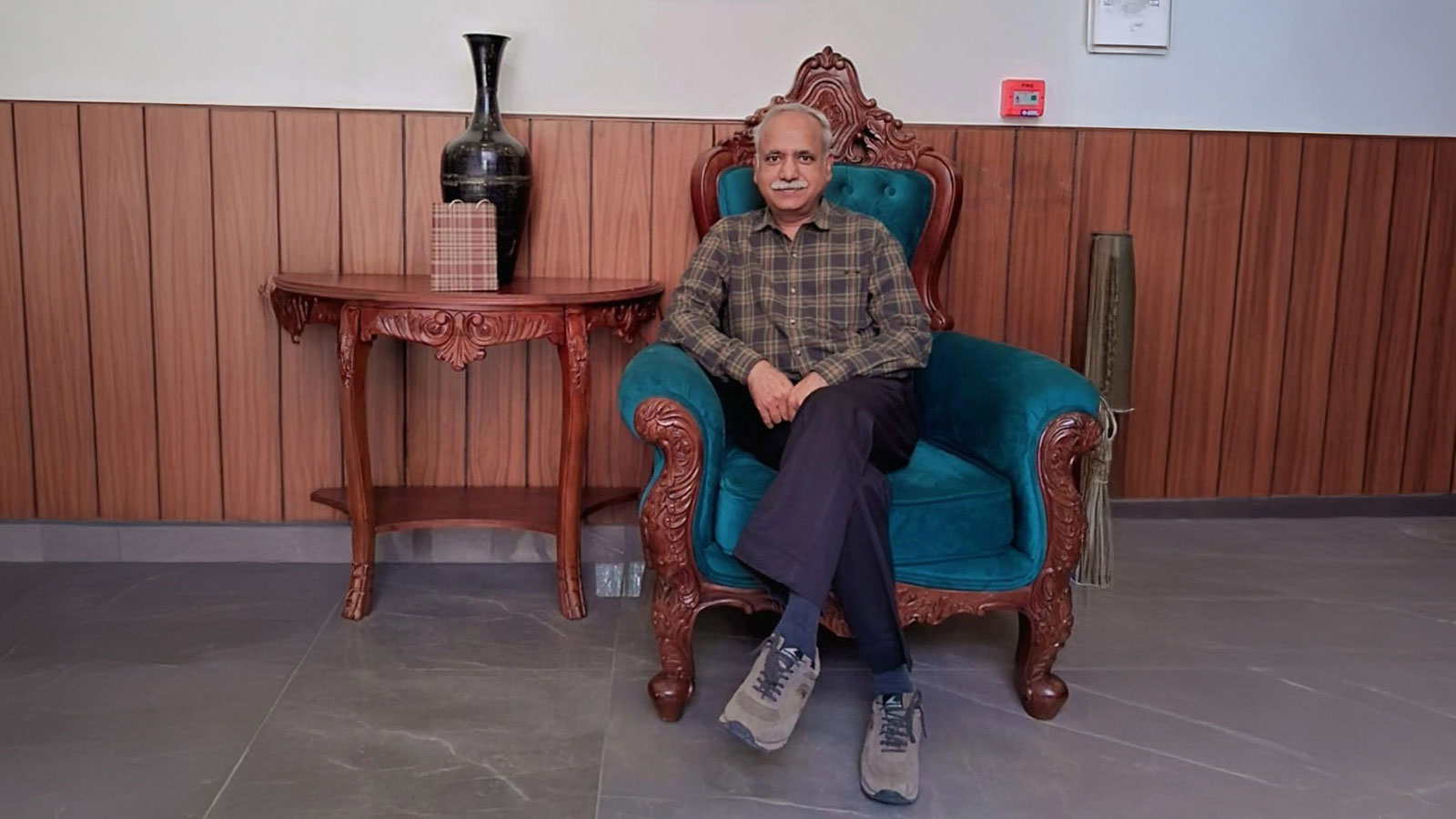
Today, I sit in that stillness. Not as a man of position or prestige, but as someone who has simply arrived—without having ever dreamed of it.
And I say this without shame, and without apology:
I did not dream.
I did not dream of the clinic I now run.
I did not imagine the house I now live in.
I did not chart the path that led to this sense of stability.
I just walked—because walking was all I knew.
Most of my life revolved around needs—basic, essential, inescapable needs. Not goals. Not visions. I was not chasing success. I was simply trying not to stop.
In my earlier reflection, “A Life Without Dream or Ambition,” I laid this thread bare: I moved forward without the fuel of ambition.
My life wasn’t built on aspirations; it was shaped by continuity.
But life is not woven from one thread alone.
If I was a thread of no colour, there were other threads—more vibrant, more daring—woven around me.
This chapter is about those threads.
This chapter is about my family.
More specifically, about two women whose belief and willpower carried me when my own vision wavered.
If I have to name one truth that echoes through the fabric of my life, it is this:
Where I did not dare to dream, my wife did.
And later, our daughter joined her.
They dreamt with open eyes and unspoken courage.
Where I stood still, they moved.
Where I paused, they persisted.
Where I hesitated, they acted.
There came a time—long and uncertain—when I had no job, no clinic, and no income.
It wasn’t a sudden breakdown. Things just kept slipping slowly—like the ground under me becoming uncertain, quietly and gradually.
I wasn’t someone who kept money aside for the future.
I was never trained—or inclined—to accumulate.
What I earned, I spent on life as it unfolded. Needs came, earnings met them, and I moved on.
There was never a culture of saving in me. Not out of recklessness, but because I believed in the immediacy of living.
I realise now that I simply never learned how to build a financial cushion.
So when the job was gone, and the clinic too, I was left with nothing—not even clarity.
I relied on personal loans taken on my credit card. To repay one, I took another. The cycle was heavy with interest, heavier with silence.
I may have stayed in that place—uncertain, undecided, unmoved—if not for her.
My wife did not wait. She became the movement.
She looked at the home we had built—the house that held our memories, our quiet pride—and said, “Let’s sell it.”
I was stunned. I resisted. I hesitated.
But she didn’t.
She made the calls. She handled the arrangements. She did the math. She made the decision I could not make for myself.
And in doing so, she gave me what I had lost: a second beginning.
She didn’t stop there.
She sold every piece of gold she owned—not one item remains to this day.
No ornaments. No tokens. Just resolve. To manage the shelter.
With all this we built something else entirely: a new clinic.
A modest chamber in a local shopping market. Simple, functional, visible. It became my new identity—not a return to glory, but a return to purpose.
She gave me back more than a space. She gave me back a sense of self.
And so began the next phase—fifteen years of loan repayment. EMIs with high interest, every month a small struggle. But again, we carried it together. As a family. Quietly. Steadily. Without complaint, without announcement. Just duty, wrapped in love.
Then came the moment that shifted everything—our daughter’s admission into a government college. For many, it would have been a matter of pride. For us, it was more—it was a financial release.
The savings from avoiding a private institution meant we could channel those funds directly into repaying the loan. Faster. Cleaner. With less pressure.
And yet, none of this was my idea.
None of this was my plan.
None of this was my dream.
But I accept this.
I accept that I was not the architect of the life I now stand within.
I accept that I was given the grace of walking alongside two visionary women.
I accept that their silent dreams became the shelter I now call my own.
When the loan was finally close to completion, I breathed a kind of relief that I hadn’t known in years. It wasn’t joy—it was more like an exhale held for too long. I thought, perhaps now, we will rest. This is enough. We have come far. We can stop here.
But they—my wife and daughter—they didn’t see “enough” as the destination.
They saw it as a foundation.
And they dreamt again.
This time, the dream was the house.
The house we had moved into after selling the old one was modest. Serviceable. It kept us warm in winters and safe in storms.
For me, it was more than enough. I had no desire to change it. I didn’t imagine more rooms, or new paint, or better architecture. I had stopped imagining.
But they hadn’t.
Quietly, they began envisioning a home that reflected not just shelter, but renewal. They didn’t want grandeur—they wanted completeness. They wanted a space where light could flow freely, where movement could breathe, and where we could live not just with purpose, but with peace.
I was hesitant again. I had no plan. No calculation. No “how.”
But this time, I didn’t resist.
I watched.
I watched them draw out the blueprints. I saw them compare designs, revise budgets, talk to masons and architects, and supervise each step of construction with meticulous attention.
They spent hours and hours, long days and evenings in getting work done form labours, electricians, stone-cutters, chimney wala, etc. etc.
I was included, always. But never burdened. They brought me in not to approve, but to witness.
And I did.
One evening, when the new home stood completed—walls gleaming softly, air filled with quiet newness—I stood at the doorway, not as an owner, but as someone gently invited in.
I looked around, and I felt something I hadn’t felt in a long time.
Not pride. Not surprise.
It was acknowledgment.
A recognition that this space, this life, this phase—was not built by me. It was built around me. It was held together not by the force of my will, but by the tenderness of their faith.
I acknowledge what I had never before said aloud:
That what I have today is not solely mine.
That I owe not just my surroundings, but my inner renewal to their quiet perseverance.
That when I paused, they pressed on.
When I stood still, they stepped forward.
And this acknowledgment does not come from guilt. It comes from clarity.
From the ability to say: I know who made this possible.
Not by chasing ambition, but by living it in silence.
As the dust of those struggle-filled years finally began to settle, and life took on a gentler rhythm, something began to rise in me—a feeling I never associated with myself.
Appreciation.
Not the kind you express once and forget.
Not a polite nod, or a formal “thank you.”
But a deep, heart-rooted, soul-level appreciation—for how everything was done.
With grace. With patience. With consistency.
No blame.
No fanfare.
No scorekeeping.
They never said, “Because of us, you have this.”
They simply kept giving.
My wife, who moved forward when I stayed behind.
My daughter, who understood sacrifice before she ever asked for comfort.
Both of them held this family with threads the world will never see—but I do.
And those threads are unbreakable.
I appreciate their choices.
I appreciate their strength.
I appreciate their belief in a man who did not dream, but who was lovingly carried by theirs.
And now, as I live in the comfort of this home—not just the structure, but the emotional space it offers—I know this: I am not the builder of this life.
I am the one it was built around. Not the one who led, but the one who was led with love.
Now, in this quieter season of life, I no longer carry the need to justify where I’ve reached.
I do not measure my journey in titles or trophies.
I measure it in the strength of the hands that held me, in the faith of the hearts that never gave up on me, and in the gentle power of dreams I never dared to have—but was allowed to live.
There is a kind of success that is visible.
And then, there is a success that is woven quietly, layer by layer, by those who never asked to be seen.
What I live today is not the result of personal ambition.
It is the fruit of shared resilience.
And this brings me to a truth I hold sacred now:
I accept. I acknowledge. I appreciate.
I accept that I did not carry the vision—but I was carried by it.
I acknowledge that my stability stands on foundations they laid.
I appreciate not just what they did—but how they did it: with grace, with silence, with relentless love.
And to you, dear reader—who has walked with me through this reflection—I offer this:
If you, too, are someone who has lived without a grand plan…
If your steps have been uncertain, your direction unclear, and your dreams undefined…
Then pause.
Look around you.
Who walked beside you?
Who quietly made space for you?
Who gave, without asking anything in return?
Maybe it was your parent.
Maybe your spouse.
Maybe your sibling, your friend, your teacher.
Someone who steadied the ground so you could keep moving.
Someone who saw for you when your own eyes were tired.
Someone who lit the way, even when they stayed in the shadows.
Accept their faith.
Acknowledge their role.
Appreciate their love.
And if you can—tell them.
Tell them not with grand words, but with sincerity.
Not with ceremony, but with presence.
Sometimes, a simple “I see you. I thank you.”
is the offering they deserve.
My journey, which began without a dream, has not been empty.
It has been filled—with quiet gestures, unseen strength, and deep, familial grace.
And so I say, with folded hands and a heart overflowing:
Thank you to my wife—for seeing in me not who I was, but who I could still become.
Thank you to my daughter—for understanding responsibility long before life demanded it.
Thank you to this universe—whatever name one may give it—for allowing me a life shaped not by ambition, but by compassion.
And if this chapter touches even one reader…
If even one person, somewhere, is reminded of the silent support that shaped them…
Then I know this story was worth telling.