
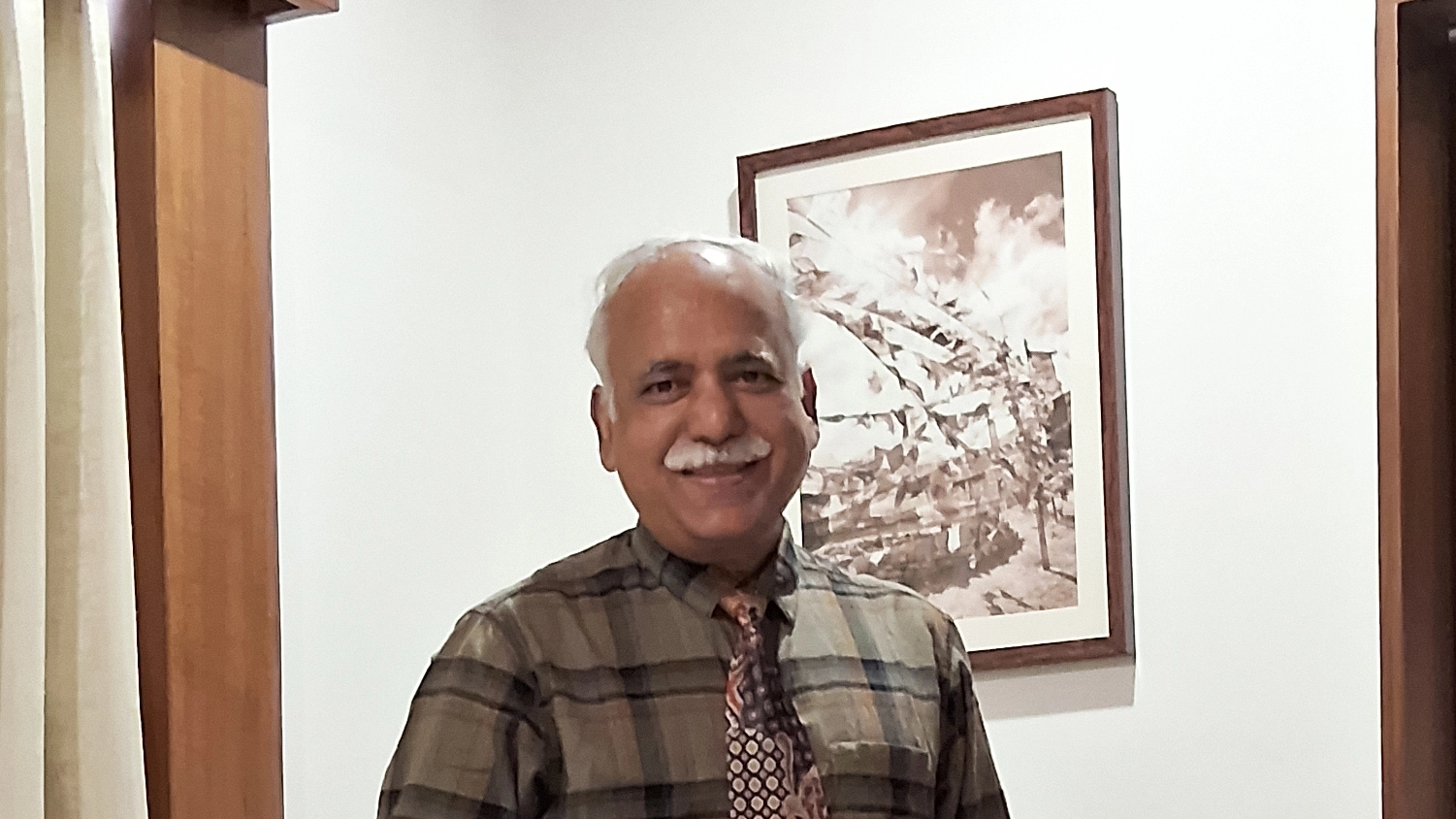
It began with a question I wasn’t prepared for. A reader wrote to me and asked, “Why are you writing your memoir?” The question was simple, but it lingered in my mind far longer than I expected.
The truth is, I had never thought of myself as someone whose life story needed to be told. I am not a public figure. I haven’t won grand awards or stood on historic stages. My journey has been an ordinary one, full of work, responsibility, and the slow passing of years. In fact, when I first started writing, I wasn’t even sure why I was doing it.
But that question made me stop and look back. And as I thought about it, memories began to rise—small moments, big moments, some joyful, some heartbreaking. They were pieces of a life that, when joined together, seemed to whisper: This is why you are writing. Not because the world demanded it, but because these moments, if left unwritten, might quietly disappear.
As the years have passed and I have grown older, a quiet realisation has taken root in my mind. Our presence in this world rarely lasts beyond two generations. People remember us because we are connected to our children and our grandchildren. A rare few live on in the faint recollection of great-grandchildren. But after that, even the most loved among us become just a name in a family tree, a faded photograph in an album that no one opens often.
I felt the truth of this deeply after losing my grandmother in 1991, and again when my father passed away in 2010. In the years that followed, I watched how their stories slowly became smaller in conversations, how their faces faded for those who had never truly known them. It was as though their lives, once vibrant and real, were becoming shadows in the collective memory.
That thought grew stronger when I saw a ninety-three-year-old member of the family, alive in body but trapped in the cruel fog of dementia and delusions. It is one of the most painful realities to witness—the mind, once full of memories, wisdom, and stories, now unable to recognise faces, recall names, or connect with its own past. Life becomes a quiet waiting, a passing of hours in near-vegetative dependence, relying on others for everything. It is not only the loss of memory, but the slow erasure of a lifetime, as if the pages of a book are being turned blank one by one. Standing beside them, I realised that if our stories are not told while we can tell them, there may come a time when even we will not remember them ourselves.
I have known this fragility in other ways too—by standing in the space between one breath and none. The first time, I was barely eleven or twelve. My mother took me to see her own mother, my Nani, in the last stage of her illness. We went to Model Basti near Karol Bagh in Delhi. I saw her alive, breathing, present. And within minutes, she was gone. That moment etched in me an early understanding that life can vanish without warning.
Years later, it happened again with my own grandmother. She was having trouble breathing, and I went to see her. We spoke; she responded. And then, just a few minutes later, she was no more. I was around twenty-seven then, already a doctor, yet no medical training could soften the shock of seeing life disappear in an instant.
And again, in 2004, I saw my mother-in-law pass before my eyes in seconds. No warning, no gradual fading—just a quiet shift from presence to absence. These moments, scattered across decades, have all whispered the same truth to me: life is so momentary that even a heartbeat feels like borrowed time.
There have been times when this fragility has touched my own life directly—not through the loss of others, but through my own closeness to the edge. In 2004, I was returning from Jaipur with a close friend from my postgraduate days when our car met with a serious accident. The sudden screech, the shattering impact, the smell of burnt rubber—it all remains vivid in my mind. In those seconds, I understood how survival is never guaranteed, how easily a life can end without time for a final word.
Years later came another test. Twice, I found myself battling COVID—once so severely that each breath felt uncertain. In those days of illness, I realised how quickly the body can be brought to its knees, how the outside world fades, and all that matters is holding on to one more moment. These experiences were not just brushes with death; they were reminders that every ordinary day is in fact extraordinary, because it could have been otherwise.
Through it all, my life has been no straight road. It has been a relentless mix of climbs and plunges—a kind of rollercoaster that never truly slows down. The struggles have been constant companions, sometimes arriving like sudden storms, other times lingering quietly for years. And yet, in the midst of those unpredictable turns, there have also been moments of grace—small victories, quiet strengths, and the kind of endurance you discover only when the track beneath your feet tilts sharply.
Then, in 2024, I attended the cremation of my sister’s mother-in-law at Nigambodh Ghat in Delhi. As I stood before the pyre, an unsettling thought rose in my mind—that one day, I too would be lying there, surrounded by my family, friends, and relatives, and I might not even be aware of their presence. I sat watching the flames work their way through the body of a kind, departed soul. The fire flickered and roared, sometimes hesitant, sometimes eager to erase every trace. From time to time, the panditji would return, pouring ghee and hawan samagri over the embers, coaxing the flames into fierce bursts until they consumed what remained. That image stayed with me—not as something morbid, but as a stark reminder of the inevitability that waits for us all.
After that day at Nigambodh Ghat, something in me began to shift. It was not sudden or dramatic—more like the slow gathering of clouds before a rain. Over the next two or three months, small fragments of my past began surfacing in my mind. Some were clear and vivid; others were hazy outlines that only took shape when I lingered on them. They weren’t just memories—they felt like stories waiting to be told.
In November 2024, I finally began to write them down. One by one, I shared pieces of my life—moments of joy, loss, struggle, and quiet revelation. They came from different years, different places, and different versions of me, but together they began to form something larger. I gave this journey a name: Manan – My Memoir. Since then, I have continued to write, each story carrying a fragment of who I have been, what I have seen, and what life has taught me.
Looking back now, I realise I never set out to write because I thought my life was remarkable. I began because I didn’t want the moments that shaped me—both the gentle and the shattering—to vanish into silence. Writing became my way of keeping them alive, not just for myself, but for anyone who might find a piece of their own journey hidden in mine.
We all live through events that change us in ways we can’t always see in the moment. Some pass quickly, like sudden storms. Others stretch across years, testing our patience and our strength. But each leaves its mark, shaping the person we become. And perhaps, if we share these moments, they can outlive the fragile two generations our memory usually lasts, carrying forward as stories rather than fading as names on a family tree.
If you, the reader, take away anything from this chapter, let it be this: your life is already a story worth telling—not because it has grand achievements, but because it holds truths, lessons, and memories no one else has lived. Whether you write them down, speak them aloud, or simply hold them close, let them be known while you can. Because one day, it will not be our possessions or positions that remain—it will be the stories we leave behind, and the way they made someone feel.
Stories are the footprints we leave behind. Write now, before silence claims it.