
A month ago, I wrote about Nepal. Before that, I wrote about Ahmedabad. Each time, I sat before the television with a heavy heart, watching strangers become numbers. Each time, I asked the same question. Why these people? Why this place? Why this moment?
This week, the news brought me another flight. And this time, my heart asked the same question from the other side.
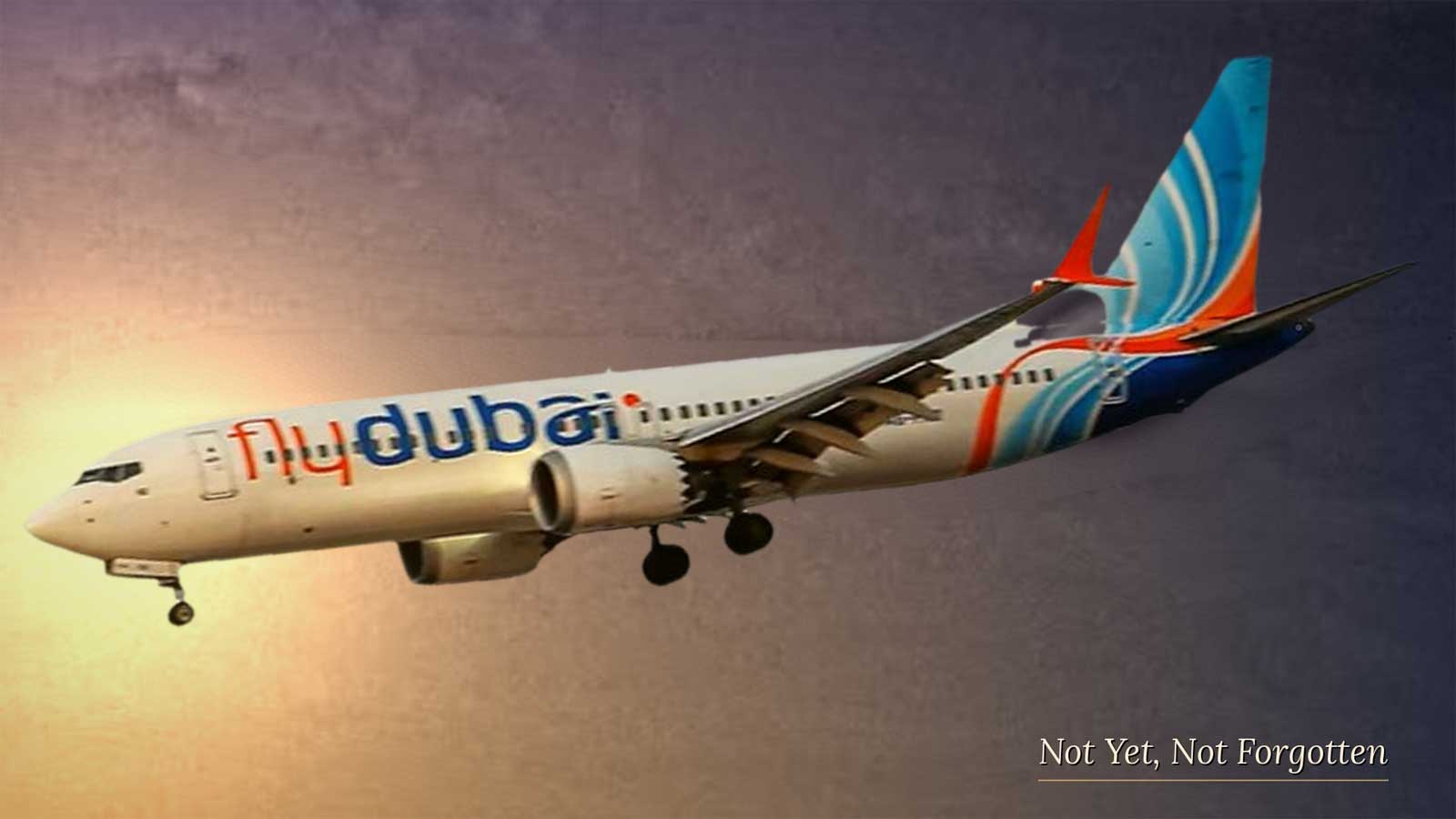
On the last day of September, a flydubai plane left Dubai for Tel Aviv with 174 people on board. Families, workers, travellers, perhaps a few going home after a long time. An ordinary flight on an ordinary day.
Then, high in the sky, the co-pilot suddenly attacked the captain sitting beside him. With a knife, inside the cockpit, the one place on an aircraft that is meant to be the safest. The plane began to fall. In a few seconds it dropped thousands of feet. In the cabin, people heard screams from the front. They felt the floor fall away beneath them.
I try to imagine those seconds. A mother holding her child tightly. An old man closing his eyes and taking God’s name. A young person thinking of a parent at home. Someone remembering a harsh word spoken that very morning, and wishing it could be taken back.
And then, the plane did not fall.
Captain Smit Machchhar, an Indian pilot, was stabbed again and again. He was bleeding badly. But he did not let go. He fought back and pulled the aircraft out of its dive. And then he did something I keep thinking about. He reached out and unlocked the cockpit door.
That door is made to keep danger out. But he understood that the danger was already inside, and that help could only come if the door was opened. Even while bleeding, his mind was clear enough to see this.
Men from the cabin rushed in. Reports say two of them were pilots themselves, not on duty, simply travelling as passengers. Together they held down the attacker. A dentist on board pressed his hands on the captain’s wounds to stop the bleeding. The two pilots took the controls and brought the plane down safely at Tabuk, in Saudi Arabia.
All 174 people came out alive.
When I read this, my eyes filled with tears. Not of sorrow this time, but of something I cannot fully name. Relief. Gratitude. Wonder.
In my last two essays, I asked why so many lives meet together at one point of death. Today I must ask why so many lives came to the very edge of death and were sent back. I could not understand the first. I cannot honestly claim to understand the second either. But my heart tells me something simple.
Their time had not yet come.
When I wrote about Nepal, I used the words “a sinister plot”. The way those tragedies came together looked so organised that it frightened me. Now I see the same kind of arrangement working the other way. Two trained pilots happened to be passengers on this very flight. A dentist happened to be sitting there. A wounded captain had just enough strength left to reach the lock. When they booked their tickets, none of them knew why they were really travelling that day. If an unseen hand can gather people for an ending, perhaps the same hand can gather people for a rescue.
I grew up hearing about karma. What we gather over many lives. What ripens in this life. What we create with each new action. I have never liked using karma to explain away anyone’s pain, and I still do not. But when I think of Captain Smit, one thought stays with me.
Perhaps something good was waiting for him. A reward kept somewhere, in an account I cannot see, waiting for its right moment. And perhaps that moment came thirty thousand feet above the earth.
But what a strange reward it was. He was not saved from the knife. He was not saved from the shock of being attacked by a colleague he trusted. He was not saved from the pain or the fear. He was placed right in the middle of the danger. And through it, he was given something very few people ever receive. He knows that his life made a difference. One hundred and seventy-three people will go home to their loved ones because of what his hands did in a few seconds.
He was chosen, and he was rewarded. I do not think one could have come without the other.
I think of the men who ran forward too. They were resting, travelling, off duty. Nobody would have blamed them for staying in their seats. Yet everything they had learned over the years, the pilots’ training, the dentist’s skill, the simple strength of their arms, suddenly found its meaning. How many of us go through a whole life without knowing why we were given what we have? They found out in one morning.
And the passengers, who could only hold on and pray, perhaps received the gentlest lesson of all. They were saved by strangers. An Indian captain. Pilots from another country. A runway in Saudi Arabia. A plane going to Israel. In my last essay I wrote that a disaster does not ask anyone’s identity. That day, the rescue did not ask either.
I hope those passengers carry this home with them. I hope they call the people they had stopped calling. I hope they hug their children a little longer. I hope they say the words they were keeping for later. In “Unspoken Words”, I grieved for people who died in the middle of a sentence. These people have been given the chance to finish theirs.
As a doctor, I know that not all of them will feel blessed straight away. Some will carry fear for a long time. Fear of flying, of sudden noise, of trusting anyone again. I pray that slowly, gently, their fear turns into gratitude.
And then there is the man who started it all.
I do not know why he did it. Nobody knows yet. I will not judge him by his country, his religion or where the plane was going. He alone must answer for what he did. But after so many years of treating patients, I know that pain of the mind can grow quietly for years, unseen and unspoken, until one day it bursts out in a way no one could imagine. Perhaps his unspoken words were not words of love, but words of pain that no one heard.
I cannot excuse what he did. But I can pray for him too. In a strange way, he was also saved that day. Because he failed, he does not carry 174 deaths on his soul. He still has this life to set his account right.
Once again, I do not have answers. But I have something I did not have after Ahmedabad and Nepal. I have seen that the same mystery which brings lives together for an ending can also bring them together to be saved.
Tonight I pray for the captain’s healing, for the courage of those who ran forward, for the passengers learning to live again, and even for the man who lifted the knife. And I thank that unseen Presence, whatever name we give it, for two quiet mercies. To one hundred and seventy-four people, it said, not yet. And to a few among them, whose goodness had been waiting somewhere in an account I cannot see, it said, not forgotten.